By Delaney McIlrath, Community Engagement Coordinator
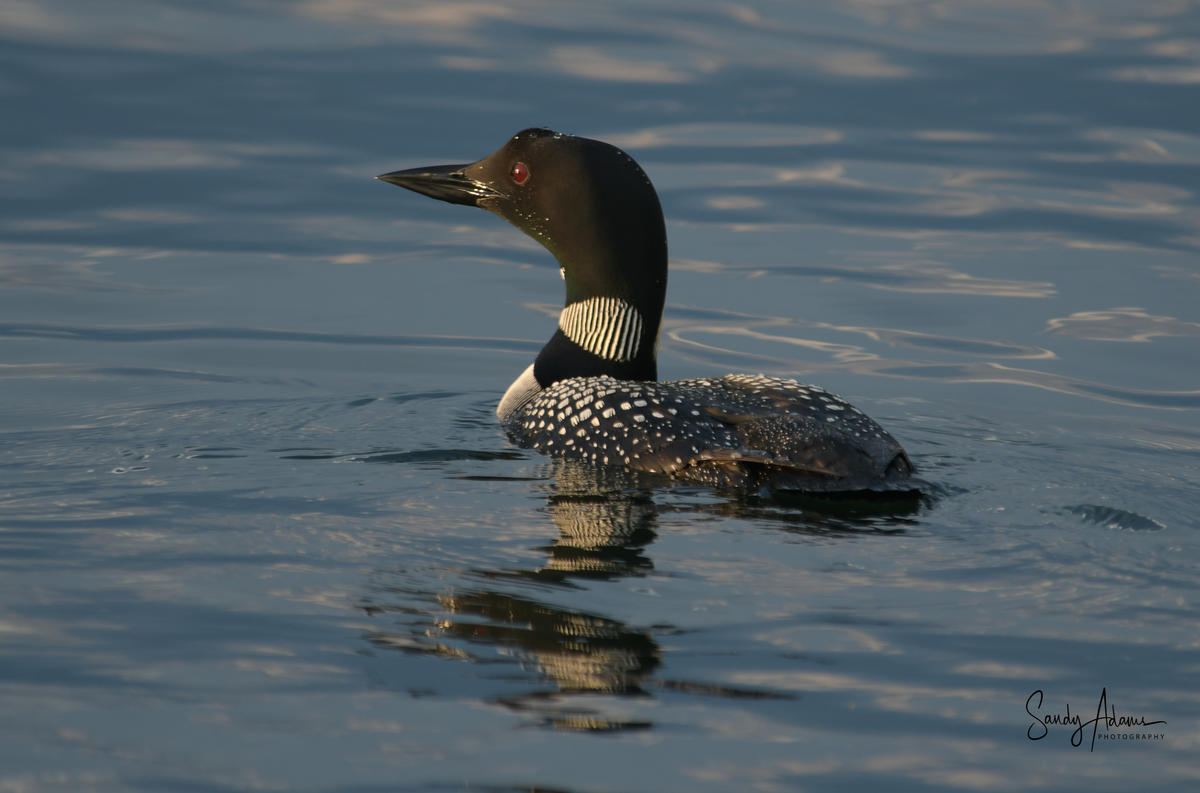
For all those connected to the St. Lawrence River, the iconic call of a loon is a cherished hallmark of the summer season. These elegant birds are not only visually striking but also serve as vital indicators of a healthy aquatic ecosystem.
Since 2006, the Thousand Islands Land Trust has partnered with the Adirondack Center for Loon Conservation (ACLC) to support the continued presence and well-being of loons throughout the region’s waterways.
ACLC’s mission is to inspire care for loons and their habitats through research, conservation, and education. Since launching the annual loon census in 2001, participation has grown from 255 volunteers on 130 lakes to over 700 on 350 lakes. This long-term data helps researchers track the health of New York’s loon population.
Collaborative Conservation for a Healthier River
This partnership began with a clear objective: to enhance loon population monitoring along the St. Lawrence River. From the outset, both TILT and ACLC recognized that improved data collection and increased community involvement were essential to advancing loon conservation across the River system. Over the years, hundreds of volunteers and staff from both organizations have contributed to ongoing efforts to monitor loon populations and protect critical habitats. What began as a targeted data-gathering initiative has since evolved into a long-term collaboration grounded in science, local ecological knowledge, and a shared commitment to conserving this extraordinary species and landscape.
Today, TILT staff and volunteers actively support ACLC by conducting loon surveys, counting chicks, and collecting key ecological data. This hands-on engagement strengthens our understanding of loon populations.
“Hearing a loon’s call on the St. Lawrence is like hearing the River speak. Our work with the ACLC helps ensure that these calls aren’t just memories but part of our everyday summers, fostering a deeper connection between the community and the River ecosystem,” shared Delaney McIlrath, TILT’s Community Engagement Coordinator.
A New Chapter: Geospatial Analysis
The next phase of our collaboration marks an exciting step forward. We will apply Geographic Information Systems (GIS) to analyze historical and current loon census data to determine location patterns.
Though still in the early stages, this work is expected to provide important insights into loon habitat preferences, population dynamics, and regions that may require enhanced protection measures.
This innovative approach underscores the evolving nature of our partnership and highlights how science and collaboration can be integrated to inform and advance conservation strategies.
“I am very excited to see where this project can go,” said Griffin Archambauilt, research biologist at ACLC. “Data collected through the loon census can tell us a lot about loon population dynamics in specific areas and where we should direct conservation efforts.”
Ensuring the Future of the Loon’s Call
Looking ahead, TILT and ACLC remain committed to protecting the distinctive calls of loons on the St. Lawrence for generations. Community members can get involved by volunteering and supporting the organization’s broader conservation missions. Every contribution, big or small, plays a role in safeguarding the lands and waters that make the Thousand Islands region so ecologically and culturally significant. T hank you for supporting this vital work—and for helping to ensure that the call of the loon continues to echo across the River each summer. More exciting updates to come!