Research Confirms What We Hoped
by Ken Nims I Stewardship Director
We’re excited to share encouraging results from ongoing grassland bird research led by Cornell PhD candidates Tim Boycott and Trifosa Iin Simamora, in partnership with TILT and regional collaborators.
Over the past three years, acoustic monitoring and point counts have documented how birds are using our conserved grasslands, including TILT’s Delano Preserve and Zenda Farms Preserve, compared to working farms, solar arrays, and solar-adjacent fields.
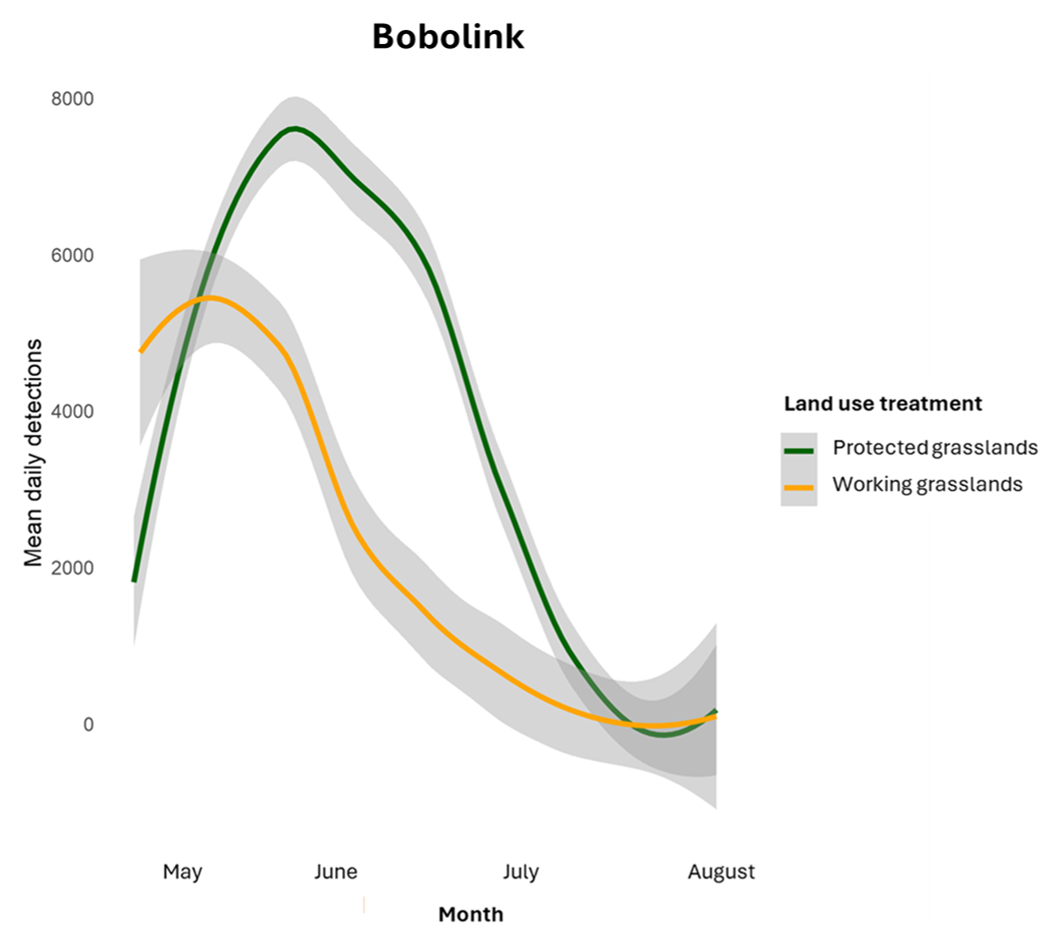
The preliminary findings are clear: rare and threatened grassland-dependent species are most abundant on protected, well-managed sites. Bobolink, Eastern Meadowlark, Savannah Sparrow, Grasshopper Sparrow, Upland Sandpiper, and Northern Harrier were all documented on TILT properties, with peak breeding activity occurring during the critical May–July nesting window.
These conserved grasslands —large, contiguous, and carefully managed to limit disturbance during nesting season—are functioning as true breeding strongholds for some of New York’s most vulnerable birds.
While working farms do provide meaningful habitat, the research suggests that multiple harvests or cuts per year can interrupt nesting cycles and reduce breeding success.
Solar and solar-adjacent grasslands supported far fewer of these specialist species and were more often dominated by generalists such as European Starlings.
In contrast, conserved properties like Delano and Zenda Farms represent a “gold standard” for grassland bird conservation in our region. As Tim Boycott shared, “When we look at the abundance and seasonal patterns of these focal species, the signal is strong. Protected, well-managed grasslands are supporting higher breeding activity and greater use by conservation-priority birds.”
We’re proud that TILT’s long-term commitment to conserving and stewarding grasslands is delivering tangible results for wildlife, and we’re grateful to Tim, Trifosa and their team for helping us document that impact.