Protecting Wildlife, Water, and Way of Life
by Bridgett McCann I Communications Specialist
This spring marks an exciting milestone as two important conservation projects—McCarn Hill and Carrier Ridge—join the growing network of protected lands surrounding Clayton. Together, these projects reflect a shared vision among local families, partners, and community members to protect the landscapes that define the Thousand Islands region.
Just outside the Heritage Heights neighborhood in Clayton, TILT recently conserved the 44 acre McCarn Hill Property, now directly connected to the S. Gerald Ingerson Preserve and Scott Farm Property. This strategic addition strengthens a corridor of protected land near the St. Lawrence River while preserving an intact block of mature forest identified as “Highly Suitable” for conservation in TILT’s GIS-informed Strategic Conservation Plan.
A standout feature of the property is its towering hemlock grove along McCarn Creek, just downstream of the Rivergate Trail Trestle Bridge. These trees play a vital role in maintaining cool, clean water and stabilizing stream banks. As the Creek flows into the St. Lawrence River, protecting this headwater stream helps safeguard water quality far beyond the property itself. Each spring, migratory forest birds like Wood Thrush and Brown Thrasher return to this cool, shaded canopy, which also provides critical habitat for the federally endangered Indiana Bat.
A Win for Habitat and Community
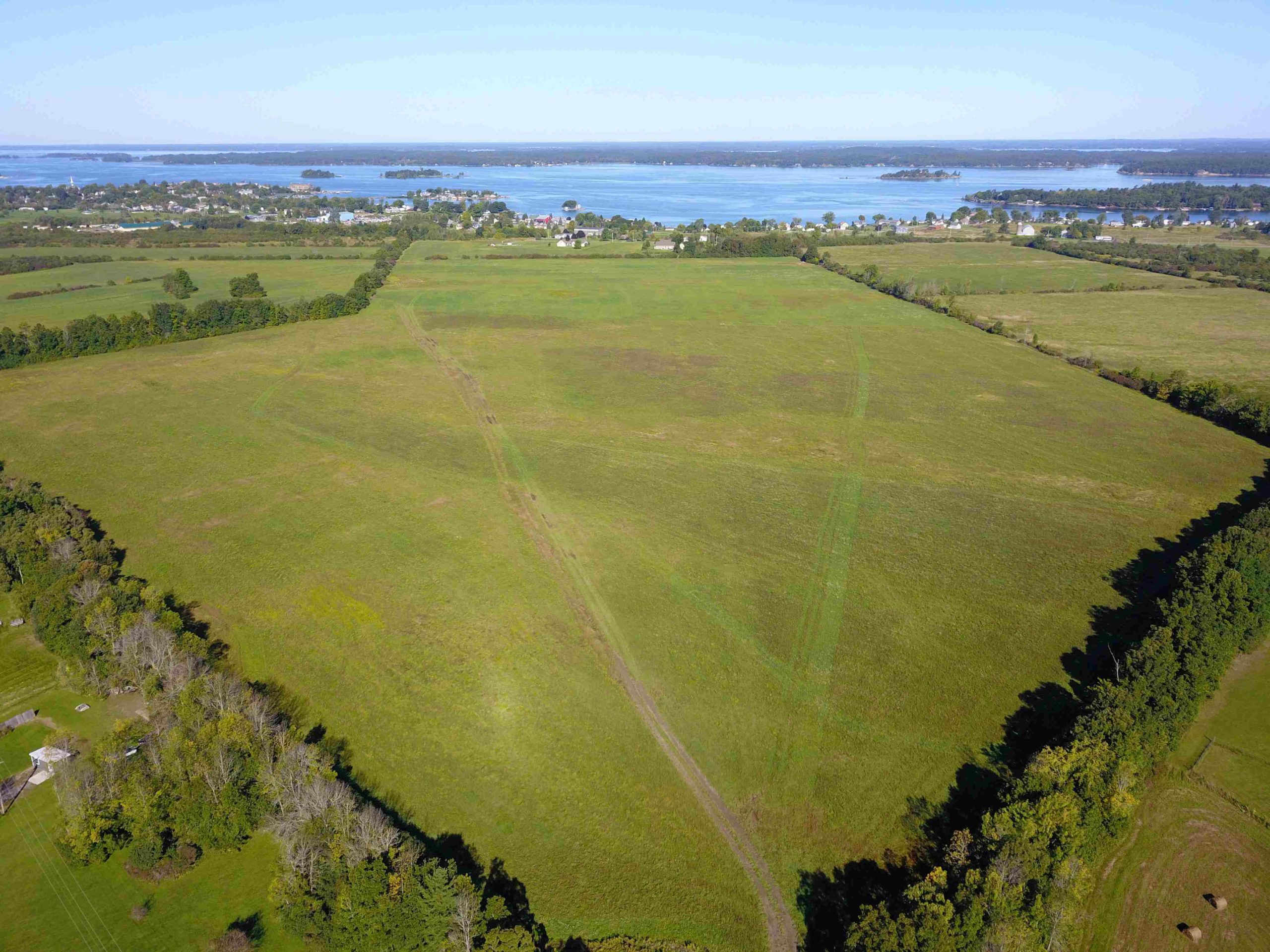
Nearby on the Village of Clayton line, another transformative conservation effort has taken shape at Carrier Ridge, where nearly 200 acres of rolling open fields stretch above Carrier Bay. Working alongside the Cantwell family, TILT protected most of this remarkable grassland while the family thoughtfully designed a subdivision to accommodate several new River-view homes that will expand and protect the tax base.
Carrier Ridge’s wide-open fields provide increasingly rare habitat for grassland birds and birds of prey— species that rely on large, undisturbed open landscapes to thrive. Northern Harriers have been seen hunting here, highlighting the property’s value as a rare grassland habitat. Protecting these lands ensures that one of the Northeast’s most threatened ecosystems remains intact for future generations.
Beyond wildlife habitat, conserving Carrier Ridge also benefits the community. Open spaces help protect water quality flowing into Carrier Bay, maintain Clayton’s scenic character, and balance conservation with responsible development. Research consistently shows that proximity to protected lands can increase property values and strengthen local economies.
“The conservation of this property is not only an environmental win—it’s a smart investment in the community,” said TILT Executive Director, Jake Tibbles. “Protected open spaces boost local economies and enhance the quality of life that makes the Thousand Islands such a special place to live.”
Together, these projects expand a connected network of conserved lands linked to the Rivergate Trail and the S. Gerald Ingerson Preserve. Made possible through support from the New York State Department of Environmental Conservation’s Water Quality Improvement Program and the generosity of local partners, these projects demonstrate what can happen when conservation and community work hand in hand.
As stewardship planning begins, both properties will continue to grow as places where wildlife flourishes, water stays clean, and people can enjoy the lasting beauty of the Thousand Islands.